Classic Chicken Piccata with Lemon Caper Butter Sauce
Published September 25, 2025
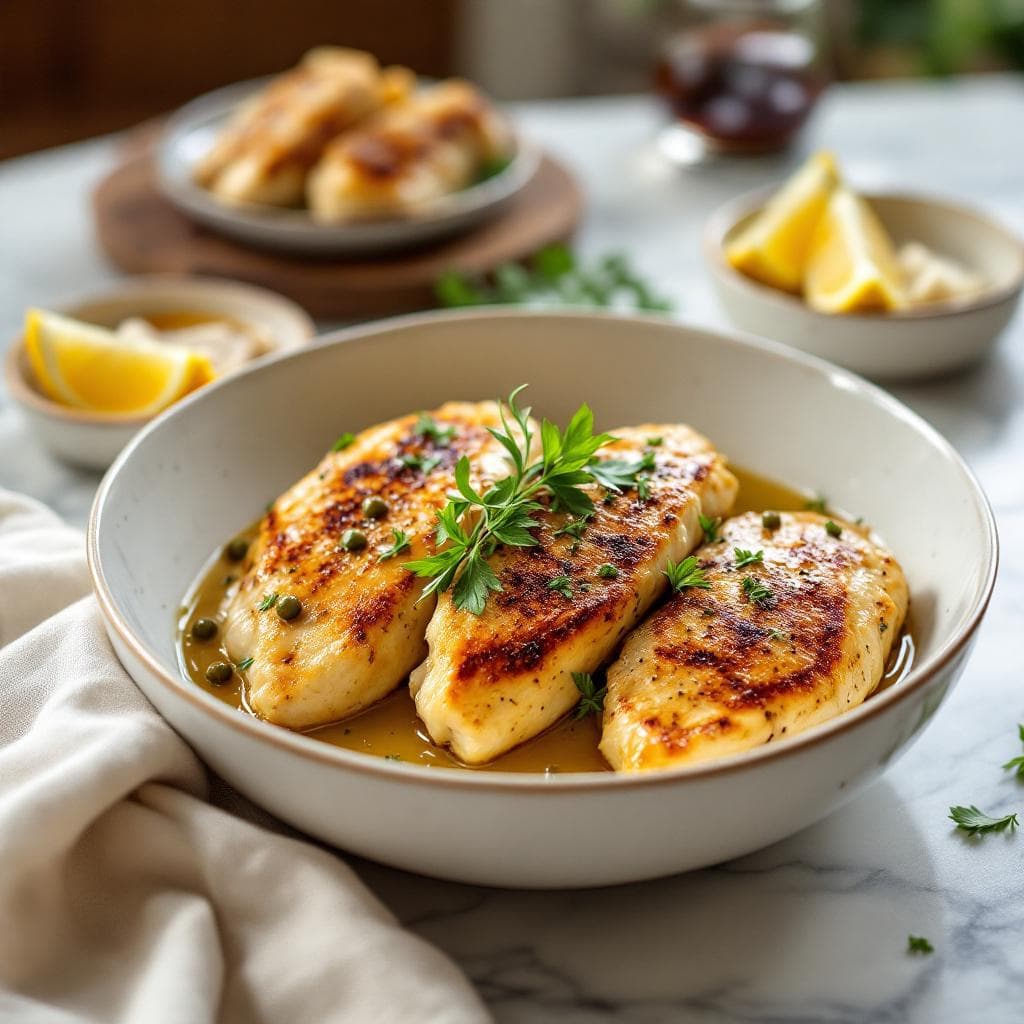
Golden, pan-seared chicken cutlets draped in a glossy, butter-mounted lemon caper pan sauce make this classic chicken piccata a weeknight triumph with genuine restaurant elegance. The sauce achieves a remarkable balance of bright acidity, briny depth, and rich finish that clings beautifully to each tender cutlet. From stovetop to table in under an hour, this is Italian-American cooking at its most refined and most approachable.
↓ Jump to Recipe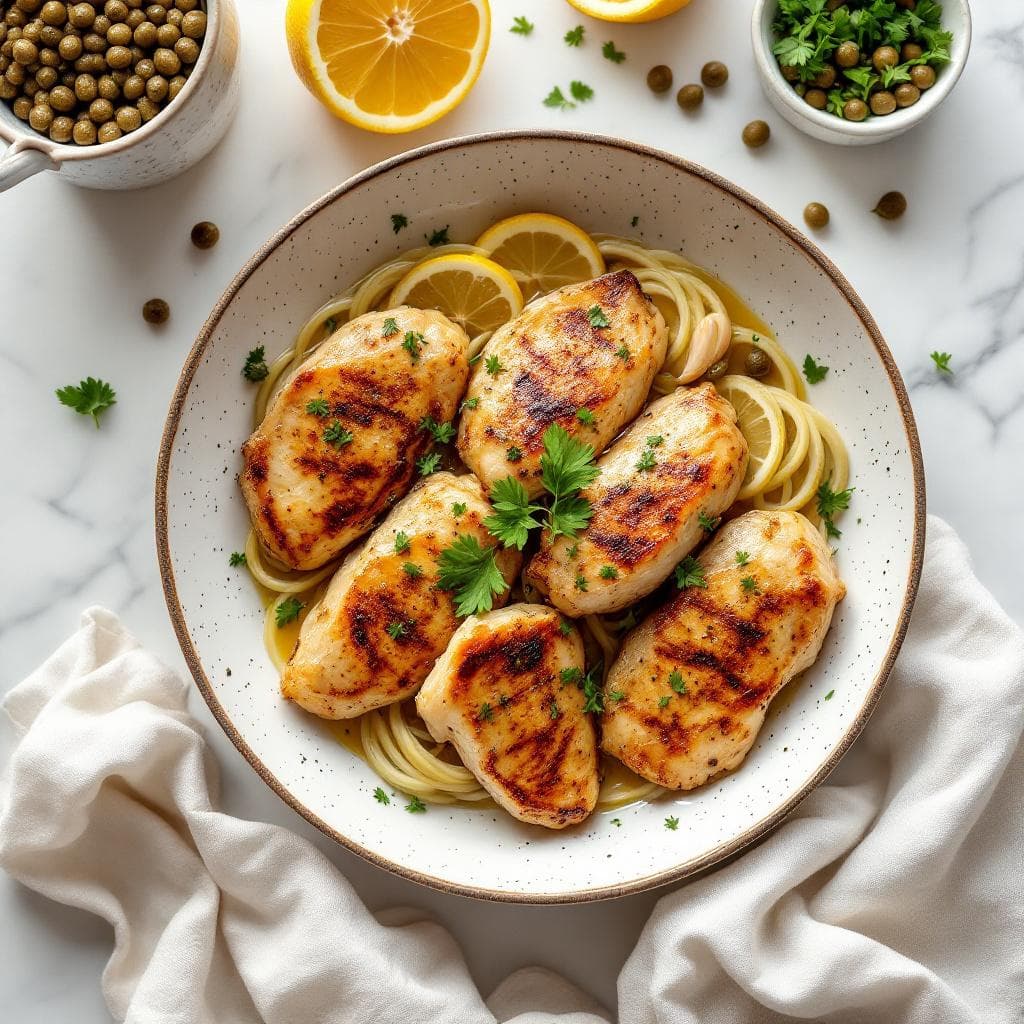
There is a particular dinner that lives rent-free in my memory, set in a small trattoria tucked into a side street in Rome where the menu was handwritten and the kitchen was the size of a generous closet. I ordered the pollo al limone on a whim, mostly because I was tired and hungry and it was the first thing I could confidently translate. What arrived was startling in its simplicity: a single golden cutlet resting in a pool of glossy, pale gold sauce, a scattering of capers, a curl of lemon zest balanced on top like a small flag of intention. I ate it in about four minutes and immediately ordered another. That dish recalibrated something in me about what Italian cooking is actually doing at its best, which is coaxing profound flavor from the fewest possible ingredients.
This version of chicken piccata honors that philosophy by leaning hard into technique rather than shortcuts. The chicken breasts are halved horizontally into true cutlets and pounded to an even thickness, which guarantees a uniform sear and prevents the dreaded overcooked, rubbery center. The dredge is a light, seasoned all-purpose flour coating that creates a delicate crust and, critically, gives the pan sauce something to cling to. The sauce itself is built directly in the fond left behind from searing, deglazed with dry white wine and bright lemon juice, then finished off the heat with cold unsalted butter whisked in piece by piece. That final mounting step is the difference between a thin, sharp pan liquid and a properly emulsified, restaurant-quality sauce with body, sheen, and a silky finish.
Chicken piccata is one of those rare recipes that works magnificently across nearly every season and occasion. In spring and summer, its citrus brightness feels clean and celebratory, particularly alongside a simple arugula salad or roasted asparagus. In autumn and winter, served over a heap of creamy mashed potatoes or buttered egg noodles, it becomes genuinely comforting. It is equally at home on a Tuesday evening when you need something impressive that does not exhaust you, and at a dinner party where you want guests to feel genuinely cared for. It scales effortlessly, it reheats gracefully, and it reliably earns the kind of compliments that feel disproportionate to the actual effort involved.
Expect bold, layered flavors from the very first bite: a savory, golden crust giving way to juicy chicken, followed immediately by the bright pop of lemon and the briny, complex punctuation of capers, all wrapped in that glossy, buttery sauce. The preparation moves quickly once you begin, so gather and measure everything before you heat the pan. The recipe that follows is straightforward, unhurried, and deeply rewarding.
Prep
15 min
Cook
25 min
Total
40 min
Servings
4 servings
Calories
420 / serving
Ingredients
- 2 large boneless, skinless chicken breasts (about 1.5 pounds total)
- 1 teaspoon kosher salt, plus more for seasoning
- 1/2 teaspoon freshly ground black pepper, plus more for seasoning
- 1/2 cup all-purpose flour, for dredging
- 4 tablespoons unsalted butter, divided and kept cold
- 3 tablespoons extra-virgin olive oil
- 4 cloves garlic, thinly sliced
- 1/2 cup dry white wine (such as Pinot Grigio or Sauvignon Blanc)
- 1/2 cup low-sodium chicken broth
- 3 tablespoons freshly squeezed lemon juice (from about 2 lemons)
- 1 teaspoon finely grated lemon zest
- 3 tablespoons brined capers, drained
- 2 tablespoons fresh flat-leaf parsley, finely chopped
- Thin lemon slices, for garnish
Instructions
- 1
Prepare the chicken cutlets by halving each breast horizontally through the center to yield four thinner cutlets. Place each cutlet between two sheets of plastic wrap and pound gently with a meat mallet or heavy skillet to an even thickness of about 1/4 inch. Season both sides generously with kosher salt and freshly ground black pepper.
- 2
Set up a dredging station with the flour spread in a shallow dish. Lightly coat each cutlet in flour on both sides, shaking off any excess. Set the floured cutlets on a clean wire rack and allow them to rest for five minutes while you heat the pan. This brief rest helps the coating adhere during the sear.
- 3
Heat a large, heavy-bottomed skillet, preferably stainless steel or cast iron, over medium-high heat. Add 2 tablespoons of olive oil and 1 tablespoon of butter. When the butter foam subsides and the fat shimmers, add two cutlets in a single layer without crowding. Sear for 3 to 4 minutes per side until deeply golden and cooked through, then transfer to a clean plate. Add the remaining tablespoon of olive oil if needed and repeat with the remaining two cutlets. Tent loosely with foil to keep warm.
- 4
Reduce the heat to medium. Add the sliced garlic to the residual fat in the pan and cook, stirring constantly, for about 45 seconds until fragrant and just barely golden. Do not allow the garlic to brown further, as it will turn bitter and compromise the delicate sauce.
- 5
Deglaze the pan with the white wine, using a wooden spoon to scrape up all the golden fond from the bottom of the skillet. Allow the wine to reduce by half, about 2 minutes. Add the chicken broth, lemon juice, and lemon zest, stirring to combine. Bring the liquid to a gentle simmer and cook for 3 to 4 minutes until slightly reduced and the flavors have melded.
- 6
Remove the pan from the heat entirely. Add the remaining 3 tablespoons of cold butter, one tablespoon at a time, whisking constantly after each addition until the sauce is glossy, emulsified, and has a light, velvety body. This technique, known as monter au beurre, is what gives the sauce its characteristic restaurant-style silkiness. Stir in the drained capers and taste the sauce, adjusting seasoning with salt and pepper as needed.
- 7
Return the chicken cutlets and any accumulated juices from the plate to the skillet, nestling them into the sauce. Spoon the sauce over each cutlet generously. Garnish with fresh flat-leaf parsley and thin lemon slices. Serve immediately alongside creamy polenta, buttered egg noodles, or roasted vegetables to capture every drop of that luminous pan sauce.
Tips and Tricks
- ✓For the silkiest, most stable pan sauce, ensure the butter is genuinely cold when you begin mounting it and that the pan is fully off the heat. Hot butter added to a hot pan will break the emulsion and leave you with a greasy, separated liquid rather than the glossy, unified sauce the dish deserves. If the sauce does break, add a small splash of cold broth and whisk vigorously off heat to bring it back together.
- ✓Chicken piccata stores well in an airtight container in the refrigerator for up to three days. To reheat, warm the cutlets gently in a covered skillet over low heat with a splash of chicken broth to revive the sauce and prevent the chicken from drying out. Avoid the microwave if possible, as rapid reheating can tighten the proteins in the chicken and dull the brightness of the lemon.
- ✓To make this dish gluten-free, substitute the all-purpose flour dredge with a fine rice flour or a dedicated gluten-free all-purpose blend. The texture of the crust will be marginally lighter but will still provide the fond necessary for a beautiful pan sauce. You can also substitute the white wine entirely with additional chicken broth and an extra splash of lemon juice if you prefer to cook without alcohol.
Nutrition Per Serving
Estimated values
420
Calories
38g
Protein
22g
Fat
12g
Carbs
1g
Fiber
1g
Sugar
680mg
Sodium
Frequently Asked Questions
What is chicken piccata?
Can I make chicken piccata without wine?
What should I serve with chicken piccata?
Why is my chicken piccata sauce not thickening?
Can I use chicken thighs instead of chicken breasts for piccata?
You Might Also Like
Enjoyed this recipe?
Get our best recipes delivered to your inbox every week.
Comments
No comments yet — be the first!