Classic Eggs Benedict with Silky Hollandaise Sauce
Published July 15, 2025
Classic Eggs Benedict brings together pillowy poached eggs, rich and lemony hollandaise sauce, savory Canadian bacon, and golden-toasted English muffins into one iconic brunch composition. Every component is crafted with intention, resulting in a plate that feels indulgent yet entirely achievable in your own kitchen. This is the definitive weekend breakfast, elevated.
↓ Jump to Recipe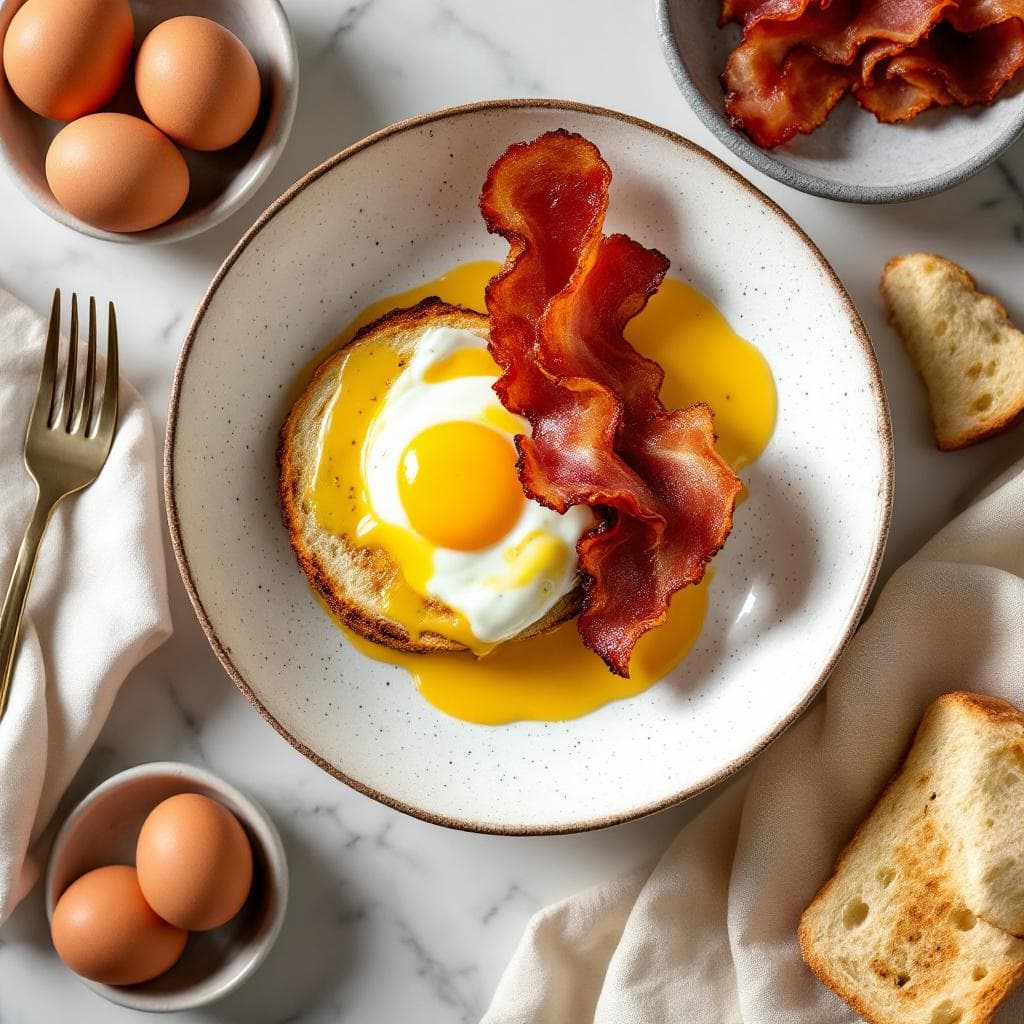
The first time I truly understood Eggs Benedict, I was seated at a corner table in a small brasserie in Manhattan, watching a cook work the brunch line with the quiet confidence of someone who had made this dish ten thousand times. The hollandaise arrived impossibly glossy, the poached eggs trembled beneath their golden coat, and the English muffin beneath it all had been toasted to a precise, crackling bronze. I remember thinking that this was not breakfast. This was ceremony. I spent the next several years chasing that memory in hotel dining rooms, weekend cafes, and eventually, my own kitchen, each attempt teaching me something new about patience, heat, and emulsification.
What sets this version apart is an unwavering commitment to technique at every stage. The hollandaise is built using the classic double-boiler method, whisking clarified butter into egg yolks that have been coaxed into a thick, pale ribbon over barely simmering water. A measured hit of fresh lemon juice and a whisper of cayenne give it brightness and gentle warmth without overwhelming the richness. For the poached eggs, a splash of white wine vinegar in the simmering water tightens the whites into a clean, compact oval, while the yolk remains molten and luscious at the center. Canadian bacon is seared briefly in a dry skillet until the edges caramelize and the interior stays tender, adding a savory, slightly smoky counterpoint to the buttery sauce.
Eggs Benedict is a dish for celebratory mornings, the kind that deserve more than a rushed bowl of cereal. It is ideal for a leisurely weekend brunch, a Mother's Day spread, a holiday gathering, or simply a slow Sunday when you want to honor the ritual of cooking something beautiful. It rewards those who enjoy a little kitchen choreography, and it is equally impressive served to guests as it is made for yourself alone, a quiet act of self-indulgence that never goes out of style.
The recipe that follows breaks the process into clear, manageable stages so that every element arrives at the table at its best simultaneously. Read through the full method before you begin, gather your mise en place, and trust the process. The result is a composed, restaurant-worthy plate of Eggs Benedict that you will return to again and again.

Prep
15 min
Cook
30 min
Total
45 min
Servings
4 servings
Calories
520 / serving
Ingredients
- 4 large eggs, very fresh
- 4 slices Canadian bacon
- 2 English muffins, split and toasted
- 1 tablespoon white wine vinegar
- 1 tablespoon unsalted butter, for searing
- 1 tablespoon finely chopped fresh chives, for garnish
- Freshly cracked black pepper, to taste
- Flaky sea salt, to taste
- 3 large egg yolks
- 1 tablespoon fresh lemon juice, plus more to taste
- 1 teaspoon cold water
- 1/2 cup unsalted butter, clarified or melted and kept warm
- 1/4 teaspoon cayenne pepper
- 1/4 teaspoon fine kosher salt
Instructions
- 1
Prepare the hollandaise base by combining the 3 egg yolks, lemon juice, and cold water in a heatproof bowl. Set the bowl over a saucepan of barely simmering water, ensuring the bottom of the bowl does not touch the water. Whisk vigorously and continuously until the mixture thickens, becomes pale, and falls from the whisk in slow, ribbon-like folds, approximately 3 to 4 minutes. Remove the bowl from the heat.
- 2
Emulsify the hollandaise by drizzling the warm clarified butter into the yolk mixture in a very slow, thin, steady stream while whisking constantly. Begin with just a few drops to establish the emulsion before gradually increasing to a thin stream. Continue until all the butter is incorporated and the sauce is thick, glossy, and coats the back of a spoon. Season with cayenne, kosher salt, and additional lemon juice to taste. Cover loosely and keep warm over the hot water with the heat turned off, whisking occasionally.
- 3
Sear the Canadian bacon by melting 1 tablespoon of unsalted butter in a medium skillet over medium-high heat. Add the Canadian bacon slices in a single layer and cook for 1 to 2 minutes per side until lightly caramelized and heated through. Transfer to a plate and tent loosely with foil to keep warm.
- 4
Toast the English muffin halves in a toaster or under a broiler until golden and crisp at the edges. Arrange the toasted halves cut-side up on serving plates and top each with a slice of seared Canadian bacon.
- 5
Poach the eggs by filling a wide, shallow saucepan with approximately 3 inches of water. Add the white wine vinegar and bring to a gentle simmer over medium heat, adjusting the heat so that small bubbles rise steadily but the water does not boil aggressively. Crack each egg individually into a small ramekin. Using a spoon, stir the water in a gentle circular motion to create a slow vortex, then slide one egg into the center. Poach for 3 to 4 minutes until the whites are fully set and opaque but the yolk remains soft and yielding. Remove with a slotted spoon and blot briefly on a clean kitchen towel. Repeat with the remaining eggs.
- 6
Assemble the Eggs Benedict by placing one poached egg atop each Canadian bacon-crowned English muffin half. Spoon a generous amount of warm hollandaise sauce over each egg, allowing it to cascade over the sides. Finish with flaky sea salt, freshly cracked black pepper, and a scattering of finely chopped chives. Serve immediately.
Tips and Tricks
- ✓Make-ahead hollandaise: Hollandaise is best served fresh, but you can hold it for up to 45 minutes by placing the bowl over warm, not simmering, water and whisking every few minutes. If the sauce thickens too much, whisk in a few drops of warm water to loosen it back to a pourable, spoonable consistency.
- ✓Poaching eggs in advance: For a crowd, poach the eggs up to one hour ahead and transfer them to a bowl of cold water to halt cooking. When ready to serve, submerge them briefly in hot, not boiling, water for 30 to 60 seconds to warm through before assembling the plates.
- ✓Substitutions and variations: Smoked salmon layered beneath the egg in place of Canadian bacon creates a beautiful Eggs Royale. A wilted bed of seasoned spinach transforms the dish into Eggs Florentine. For a gluten-free option, serve the components over sliced, toasted sweet potato rounds in place of the English muffin.
Nutrition Per Serving
Estimated values
520
Calories
22g
Protein
38g
Fat
24g
Carbs
1g
Fiber
2g
Sugar
890mg
Sodium
Frequently Asked Questions
Why does my hollandaise sauce break or turn greasy?
How do I keep poached eggs from spreading in the water?
Can I make Eggs Benedict ahead of time for a brunch party?
What is the difference between Canadian bacon and regular bacon for Eggs Benedict?
What does Eggs Benedict taste like?
You Might Also Like

Enjoyed this recipe?
Get our best recipes delivered to your inbox every week.
Comments
No comments yet — be the first!