Easy Teriyaki Salmon Bowls with Rice and Vegetables
Published September 4, 2025
These teriyaki salmon bowls bring together tender, caramelized glazed salmon, fluffy jasmine rice, and crisp seasonal vegetables in one nourishing dinner bowl. The homemade teriyaki sauce is simple, clean, and far better than anything from a bottle. Whether you are meal prepping for the week or sitting down to a weeknight dinner, this bowl delivers every time.
↓ Jump to Recipe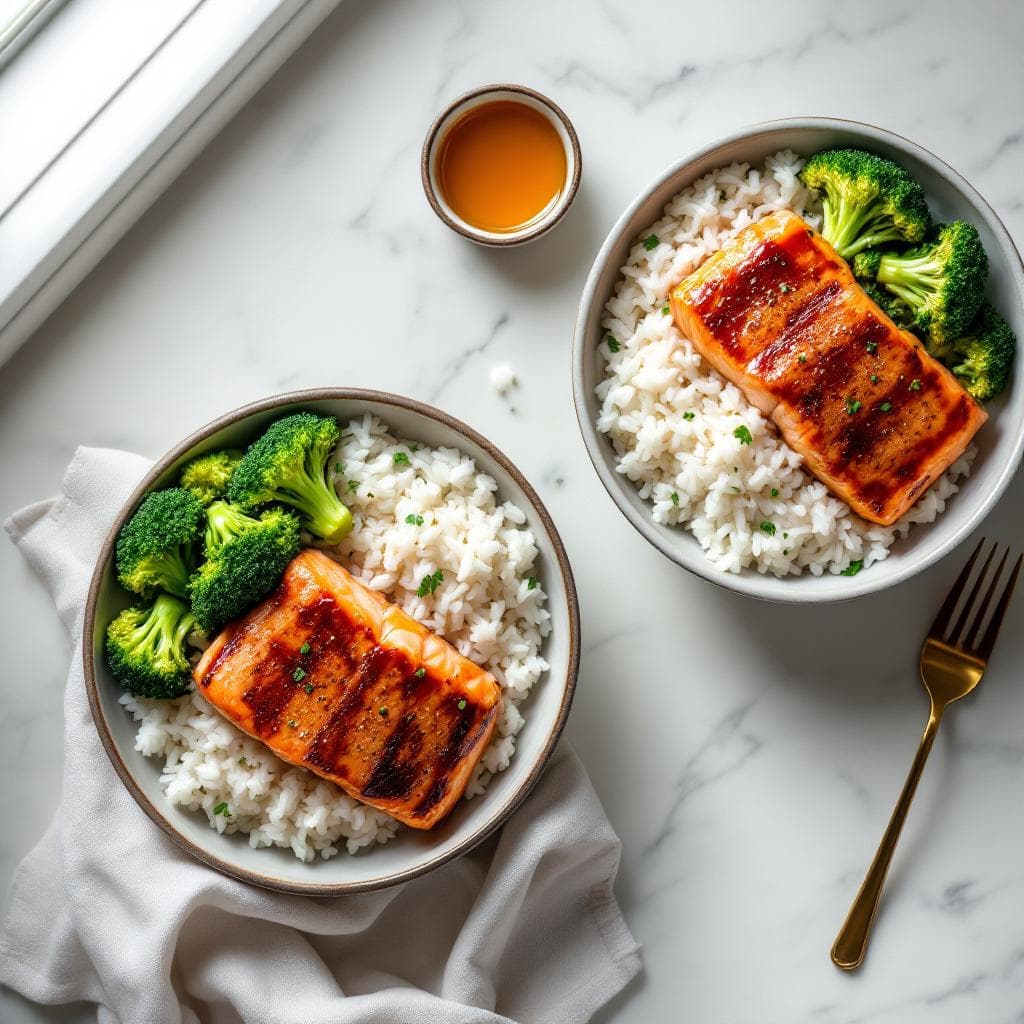
The first time I made a teriyaki salmon bowl from scratch, I was standing in my kitchen on a rainy Thursday evening with a fillet of salmon I had optimistically bought two days earlier and a very short list of pantry staples. I had been craving something warm and deeply savory, the kind of meal that feels like it took effort even when it did not. I whisked together soy sauce, honey, garlic, and a splash of rice vinegar, and the moment that salmon hit the hot pan and the glaze began to bubble and caramelize around the edges, I knew I had found something worth repeating. My partner wandered in from the living room following the smell alone, and by the time we sat down with our bowls, the rain outside felt like the perfect backdrop.
What sets this version apart is the double-glaze technique. Instead of marinating the salmon and hoping the flavor soaks in, you brush a light coat of the teriyaki sauce onto the fish before it hits the heat, then spoon the remaining reduced sauce directly over the top right before serving. This gives you two distinct layers of flavor: a slightly charred, sticky crust that forms during cooking, and a bright, glossy finish that keeps the salmon from ever feeling dry or flat. The sauce is made entirely from scratch using pantry staples, with no refined sugar and no mystery additives. A small amount of cornstarch thickens it just enough to cling beautifully to every bite.
This bowl is made for busy weeknights, Sunday meal prep sessions, and anyone who wants a dinner that feels indulgent but is genuinely good for them. Salmon is one of the most nutrient-dense proteins you can put on a dinner table, rich in omega-3 fatty acids and satisfying in a way that keeps you full for hours. The vegetables are flexible, so this recipe works year-round. In spring and summer, snap peas and shredded purple cabbage are wonderful. In fall and winter, roasted broccoli and shredded carrots bring warmth and depth. This is the kind of bowl that becomes a household staple not because it is trendy, but because it is genuinely delicious and endlessly adaptable.
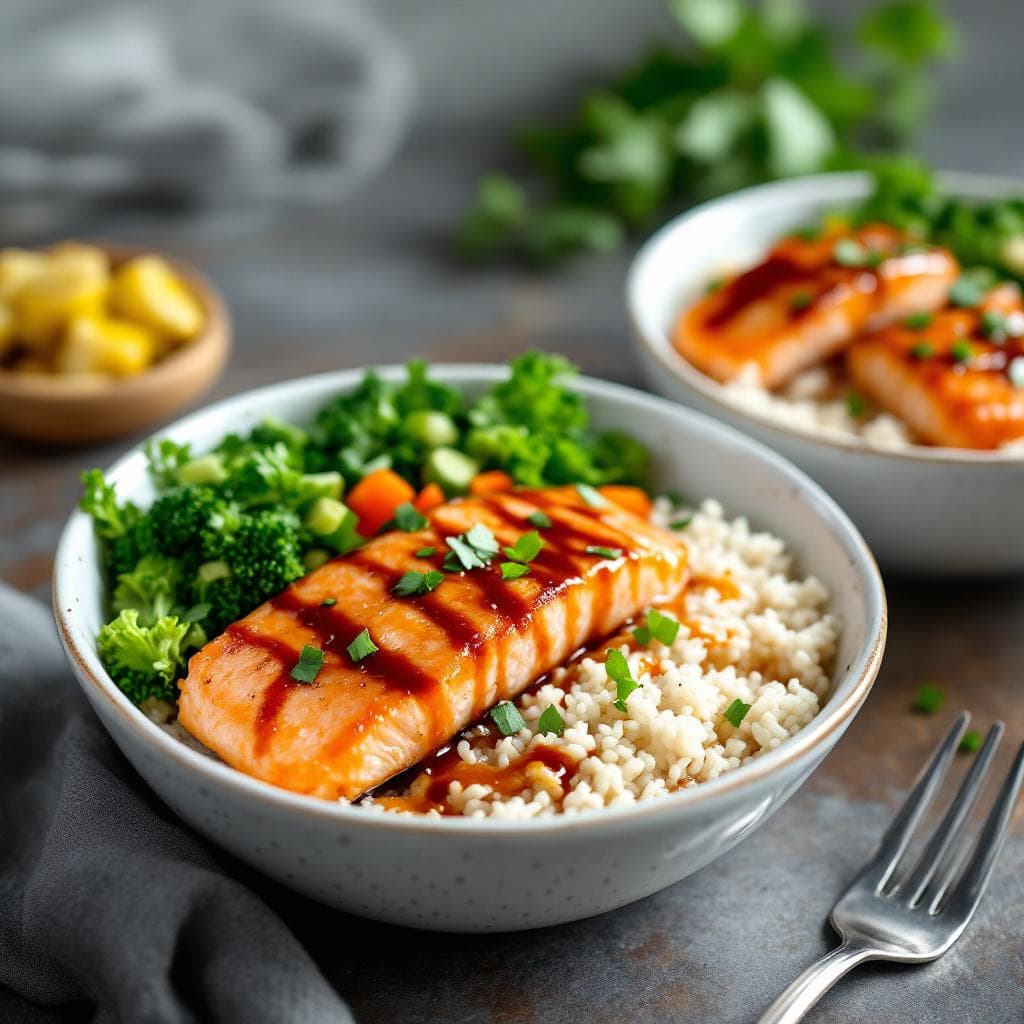
You can expect a bowl that is colorful, balanced, and full of texture. The salmon is tender at the center with caramelized edges, the rice is fluffy and just slightly sticky, and the vegetables add freshness and crunch that keep every bite interesting. The sauce ties everything together with a savory-sweet depth that tastes far more complex than the ingredients suggest. Here is everything you need to make it tonight.
Prep
15 min
Cook
30 min
Total
45 min
Servings
4 servings
Calories
540 / serving
Ingredients
- 4 salmon fillets (about 6 ounces each), skin-on
- 1 1/2 cups jasmine rice, rinsed
- 3 cups water
- 1/4 cup low-sodium soy sauce
- 2 tablespoons honey
- 1 tablespoon rice vinegar
- 1 teaspoon sesame oil
- 2 cloves garlic, minced
- 1 teaspoon fresh ginger, grated
- 1 teaspoon cornstarch mixed with 1 tablespoon cold water
- 2 cups broccoli florets
- 1 cup shredded purple cabbage
- 1 medium carrot, julienned or shredded
- 1 tablespoon neutral oil (such as avocado or grapeseed oil)
- 2 green onions, thinly sliced
- 1 tablespoon sesame seeds, for garnish
Instructions
- 1
Cook the rice. Combine the rinsed jasmine rice and 3 cups of water in a medium saucepan. Bring to a boil over high heat, then reduce the heat to the lowest setting, cover tightly, and cook for 15 minutes. Remove from heat and let steam, covered, for an additional 5 minutes. Fluff with a fork and set aside.
- 2
Make the teriyaki sauce. In a small saucepan over medium heat, combine the soy sauce, honey, rice vinegar, sesame oil, minced garlic, and grated ginger. Whisk to combine and bring the mixture to a gentle simmer. Stir in the cornstarch slurry and cook for 1 to 2 minutes, stirring continuously, until the sauce thickens enough to coat the back of a spoon. Remove from heat and divide into two portions: one for glazing before cooking and one for finishing.
- 3
Prepare the vegetables. Bring a small pot of lightly salted water to a boil and blanch the broccoli florets for 2 minutes, until bright green and just tender. Drain and set aside. Place the shredded cabbage and julienned carrot in a bowl and toss with a small pinch of salt and a splash of rice vinegar if desired. Set aside.
- 4
Glaze and cook the salmon. Pat the salmon fillets dry with paper towels and season lightly with salt and pepper. Brush each fillet on both sides with a thin coat of the teriyaki sauce. Heat the neutral oil in a large nonstick skillet or cast iron pan over medium-high heat. Place the salmon fillets skin-side up and cook for 3 to 4 minutes without moving them, until a golden crust forms. Flip carefully and cook for another 3 to 4 minutes on the skin side. The salmon is done when it flakes easily with a fork at the thickest part.
- 5
Finish the salmon with extra glaze. In the final 30 seconds of cooking, spoon the reserved portion of teriyaki sauce over each fillet, allowing it to bubble and coat the tops. Remove the pan from heat and let the salmon rest for 2 minutes.
- 6
Assemble the bowls. Divide the cooked rice evenly among four bowls. Arrange the blanched broccoli, shredded cabbage, and julienned carrot around the rice. Place one glazed salmon fillet in each bowl, skin-side down, and drizzle any remaining sauce from the pan over the top.
- 7
Garnish and serve. Finish each bowl with sliced green onions and a sprinkle of sesame seeds. Serve immediately while the salmon is warm and the glaze is still glossy.
Tips and Tricks
- ✓Make-ahead tip: The teriyaki sauce can be made up to one week in advance and stored in an airtight jar in the refrigerator. The rice can also be cooked ahead and reheated with a splash of water, covered, in the microwave for about 2 minutes. Store cooked salmon separately and gently reheat it in a low oven at 275 degrees Fahrenheit for 10 minutes to avoid drying it out.
- ✓Substitutions: If salmon is not available, this recipe works beautifully with other proteins. Boneless, skinless chicken thighs, extra-firm tofu pressed and cubed, or even shrimp all take on the teriyaki glaze wonderfully. Swap jasmine rice for brown rice, quinoa, or cauliflower rice to suit your nutritional goals, keeping in mind that cook times will vary.
- ✓Storage: Leftover bowls can be stored in an airtight container in the refrigerator for up to 3 days. Keep the components separate if possible to preserve the texture of the vegetables and the crispness of the salmon crust. The assembled bowl can also be packed for lunch the next day and eaten at room temperature or gently reheated.
Nutrition Per Serving
Estimated values
540
Calories
38g
Protein
16g
Fat
58g
Carbs
4g
Fiber
9g
Sugar
620mg
Sodium
Frequently Asked Questions
Can I use frozen salmon for teriyaki salmon bowls?
Is teriyaki salmon healthy?
How do I know when salmon is fully cooked?
Can I bake the salmon instead of pan-searing it?
What vegetables go well in teriyaki salmon bowls?
You Might Also Like
Enjoyed this recipe?
Get our best recipes delivered to your inbox every week.
Comments
No comments yet — be the first!