Pork Tenderloin with Apple Cider Glaze
Published December 16, 2025
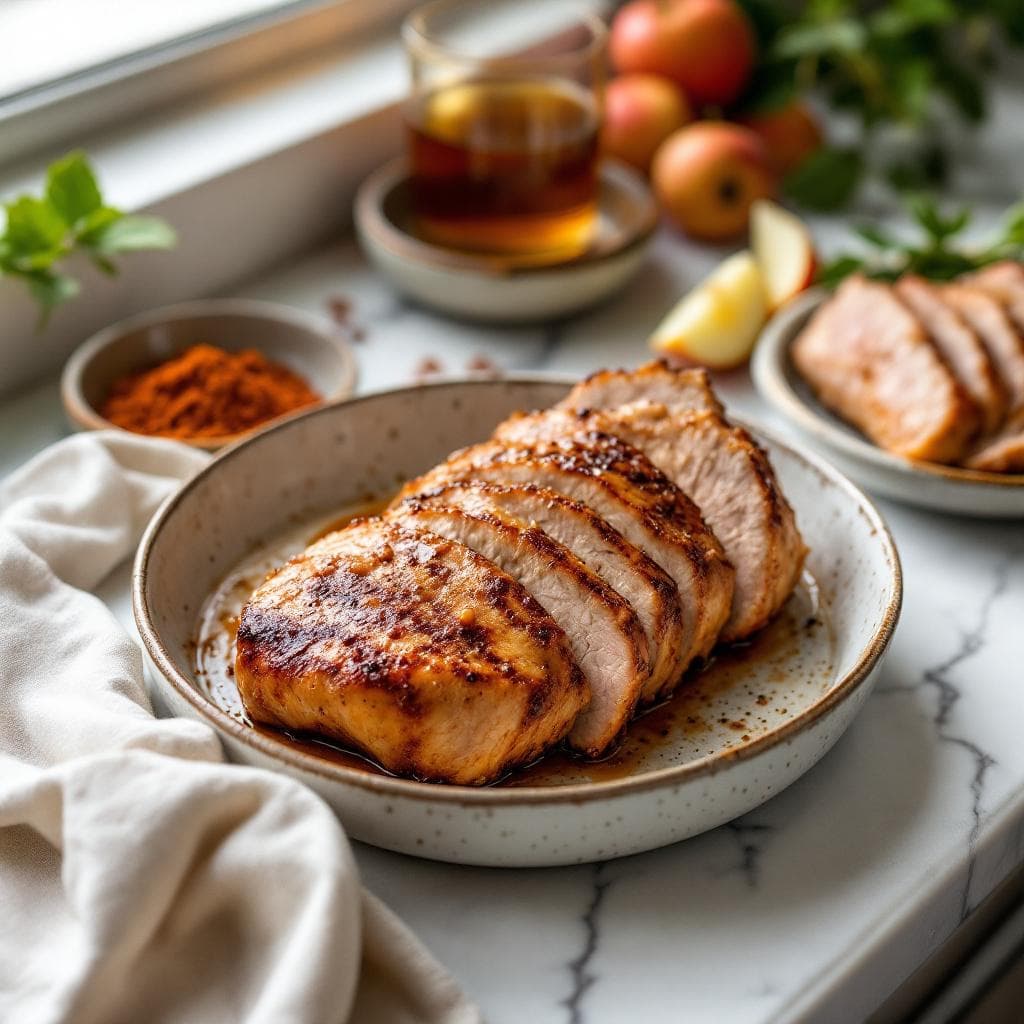
This pork tenderloin with apple cider glaze delivers a beautifully seared, oven-finished roast lacquered in a glossy reduction of fresh apple cider, whole-grain mustard, and fragrant thyme. It is an elegant yet approachable weeknight dinner that reads as a weekend centerpiece. Expect tender, blush-pink slices bathed in a sweet, tangy glaze with just enough depth to feel truly special.
↓ Jump to Recipe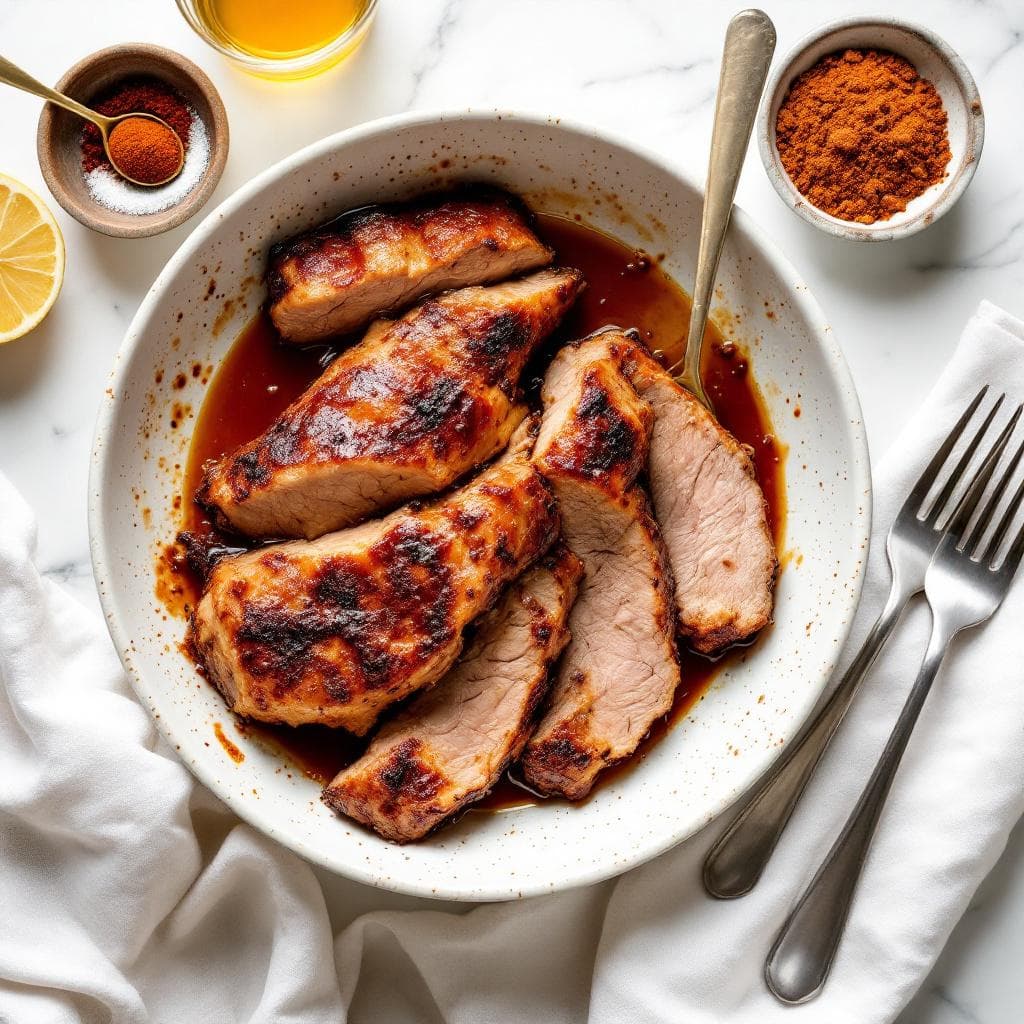
There is a particular kind of autumn evening that calls for something roasted. The first time I made this dish, the kitchen windows had fogged over from the cold outside, and the scent of simmering apple cider curling up from the saucepan was almost enough of a meal on its own. I had grabbed a pair of pork tenderloins from the butcher on a whim, drawn in by a basket of freshly pressed cider sitting on the counter beside the register. Something about the pairing felt inevitable, the way certain ingredients seem to recognize each other across a farmers market table. That night, dinner was on the table in under an hour, and every single person around it asked for the recipe before dessert.
What sets this version apart is the deliberate reduction of the cider before it ever touches the pork. Rather than simply deglazing the pan and calling it a glaze, we simmer the cider down with a splash of apple cider vinegar, a spoonful of whole-grain mustard, a knob of unsalted butter, and fresh thyme until it thickens into something genuinely luxurious. The result is a lacquer with real backbone, sweet without being cloying, and bright enough to cut through the richness of the pork. A quick sear in a cast iron skillet before the oven ensures a deeply caramelized crust, which the glaze clings to beautifully in the final minutes of roasting.
This recipe is tailor-made for the fall and early winter months, when apple cider is at its most aromatic and the craving for something warming and a little celebratory runs high. It is the kind of dish that works equally well for a quiet Tuesday dinner as it does for a Sunday supper with guests. If you are hosting and feel the pressure of wanting to look accomplished without spending all day in the kitchen, this tenderloin is your answer. It scales gracefully, presents with genuine elegance on a platter, and pairs beautifully with roasted root vegetables, creamy polenta, or a simple green salad.
The recipe that follows is streamlined but precise. The steps move quickly, so having your ingredients prepped and your skillet hot before you begin will make the process feel effortless. A reliable instant-read thermometer is your most important tool here, as pork tenderloin goes from perfectly rosy to overcooked in a matter of minutes. Pull it at 145 degrees Fahrenheit, let it rest under a loose foil tent, and spoon that gleaming cider reduction over every slice. You are going to want more glaze than you think.
Prep
15 min
Cook
30 min
Total
45 min
Servings
4 servings
Calories
370 / serving
Ingredients
- 2 pork tenderloins (about 1 pound each), silver skin removed
- 1 teaspoon kosher salt, plus more to taste
- 1/2 teaspoon freshly ground black pepper
- 1/2 teaspoon garlic powder
- 1/2 teaspoon smoked paprika
- 2 tablespoons neutral oil, such as avocado or grapeseed
- 2 cups fresh apple cider
- 2 tablespoons apple cider vinegar
- 1 tablespoon whole-grain Dijon mustard
- 2 tablespoons unsalted butter
- 4 sprigs fresh thyme
- 2 cloves garlic, smashed
- 1 tablespoon light brown sugar
Instructions
- 1
Preheat your oven to 400 degrees Fahrenheit. Pat the pork tenderloins thoroughly dry with paper towels, which is essential for achieving a proper sear. In a small bowl, combine the kosher salt, black pepper, garlic powder, and smoked paprika. Season the tenderloins all over with this spice blend, pressing gently so it adheres.
- 2
Heat a large, oven-safe cast iron skillet over medium-high heat until it begins to smoke lightly. Add the neutral oil and swirl to coat. Place both tenderloins in the skillet and sear without moving them for 2 to 3 minutes per side, turning to brown all surfaces evenly. You are looking for a rich, mahogany crust on the exterior. Transfer the seared tenderloins to a plate and set aside.
- 3
Reduce the heat to medium. Add the smashed garlic cloves to the same skillet and cook for 30 seconds until fragrant. Pour in the apple cider and apple cider vinegar, scraping up any browned bits from the bottom of the pan with a wooden spoon. Add the fresh thyme sprigs and brown sugar, stirring to dissolve.
- 4
Bring the cider mixture to a brisk simmer and cook, stirring occasionally, for 8 to 10 minutes until the liquid has reduced by roughly half and coats the back of a spoon with a light syrupy consistency. Whisk in the whole-grain mustard and butter until the butter is fully melted and the glaze is glossy and unified. Remove and discard the thyme sprigs and garlic.
- 5
Return the seared tenderloins to the skillet, spooning a generous amount of the cider glaze over each one. Transfer the skillet to the preheated oven and roast for 12 to 15 minutes, basting once halfway through, until an instant-read thermometer inserted into the thickest part reads 145 degrees Fahrenheit.
- 6
Remove the skillet from the oven and transfer the tenderloins to a cutting board. Tent them loosely with foil and allow them to rest for 5 to 7 minutes. During this time, return the skillet to the stovetop over low heat to keep the glaze warm. Taste and adjust seasoning with salt if needed.
- 7
Slice the tenderloins on a slight bias into medallions about 3/4 inch thick and arrange on a warmed serving platter. Spoon the remaining apple cider glaze generously over the sliced pork and garnish with a few fresh thyme leaves if desired. Serve immediately.
Tips and Tricks
- ✓Make-ahead glaze: The apple cider glaze can be prepared up to two days in advance and stored in an airtight container in the refrigerator. Reheat it gently over low heat, whisking in a small knob of butter to restore its glossy consistency before serving.
- ✓Substitutions: Fresh apple cider is strongly preferred here for its full, fruity body, but in a pinch, unfiltered apple juice will work. Avoid standard filtered apple juice, as it lacks the complexity needed to build a glaze with real depth. For a spicier profile, swap the whole-grain Dijon mustard for a hot-style whole-grain mustard.
- ✓Storage: Leftover sliced pork stores well in an airtight container in the refrigerator for up to 3 days. Reheat gently in a covered skillet with a splash of cider or chicken broth over low heat to prevent the meat from drying out. The glaze also makes an excellent sauce for reheated leftovers served over rice or egg noodles.
Nutrition Per Serving
Estimated values
370
Calories
46g
Protein
13g
Fat
18g
Carbs
0g
Fiber
14g
Sugar
540mg
Sodium
Frequently Asked Questions
What temperature should pork tenderloin be cooked to?
Can I make pork tenderloin with apple cider glaze ahead of time?
What is the difference between pork tenderloin and pork loin?
What should I serve with pork tenderloin and apple cider glaze?
How do I keep pork tenderloin from drying out in the oven?
You Might Also Like
Enjoyed this recipe?
Get our best recipes delivered to your inbox every week.
Comments
No comments yet — be the first!