Authentic Cacio e Pepe (Roman Pasta with Pecorino and Black Pepper)
Published December 23, 2025
Cacio e pepe is the ultimate study in restraint: three core ingredients, one ancient Roman technique, and a result so luxurious it requires no embellishment. This version walks you through the precise method for achieving a glossy, emulsified sauce that clings to every strand of tonnarelli without a trace of clumping. It is pasta in its most honest, most exquisite form.
↓ Jump to Recipe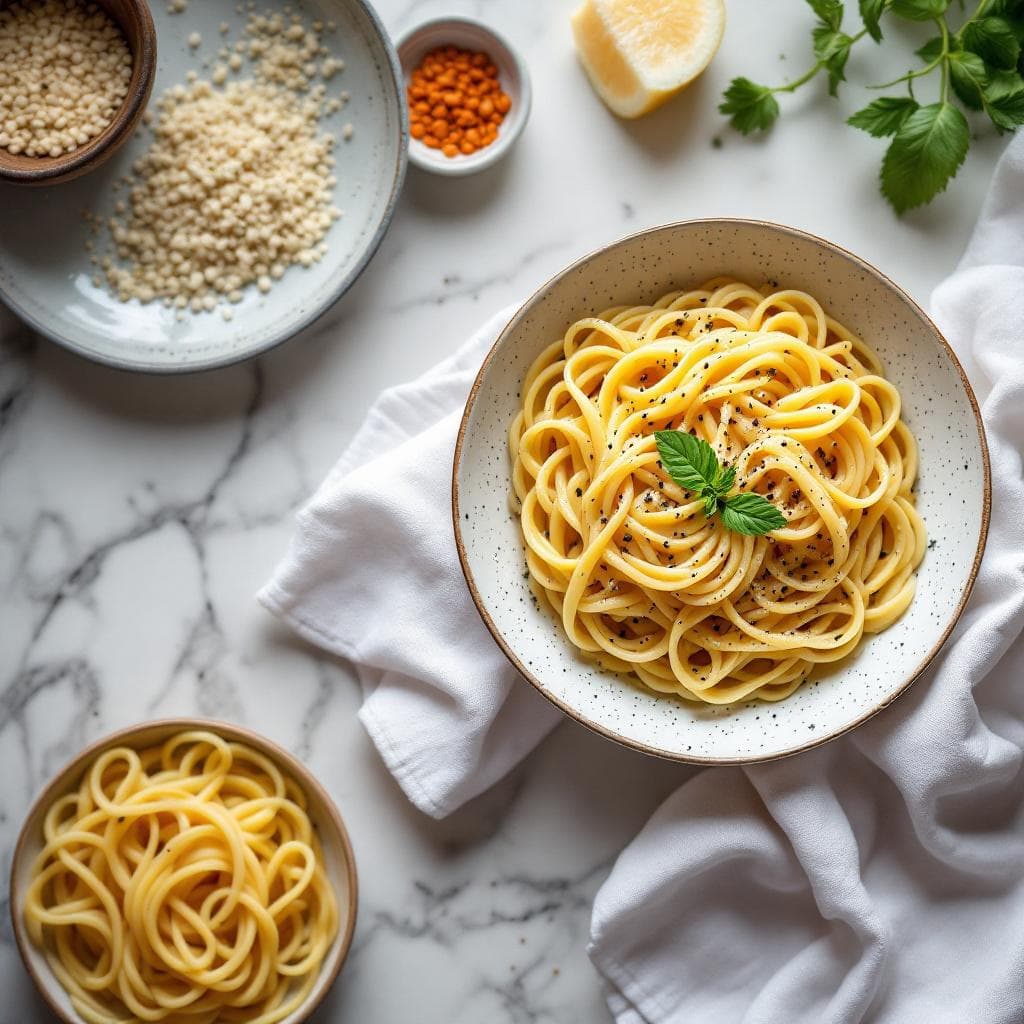
There is a small trattoria tucked behind the Pantheon in Rome where I once ate a bowl of cacio e pepe so perfect that I sat in silence for a full minute before reaching for my fork. The room smelled of toasted black pepper and old wood. The waiter, a man of approximately seventy who had clearly seen every variety of tourist bewilderment, simply nodded when he set the bowl down, as if to say: yes, this is what we have always been doing here. That single dish rewired something in my understanding of what food could be. It was not complex. It was not garnished or gilded. It was three ingredients performing at an absolute apex of their potential.
What distinguishes this version from a well-intentioned but broken cacio e pepe is the technique of tempering the cheese. Rather than adding Pecorino Romano directly to the hot pan, you first whisk it with a measured amount of lukewarm pasta water off the heat, creating a smooth, fluid paste before it ever touches warmth. This pre-emulsification is the secret most home cooks skip, and it is the reason your sauce will be silky and cohesive rather than gritty and seized. A touch of Parmigiano-Reggiano is blended in alongside the Pecorino, softening the sharper edges of the aged sheep's milk cheese and lending the sauce a rounder, more voluptuous body without compromising its essential Roman character.
Cacio e pepe belongs to no particular season because it answers to no particular mood other than hunger and a desire for something deeply satisfying. It is the pasta you make on a Tuesday when the refrigerator offers nothing inspiring, and it is equally the pasta you make for a dinner party when you want to demonstrate genuine culinary confidence without theatrical effort. It is ideal for anyone who loves cooking but craves the meditative simplicity of a dish that demands focus rather than a long ingredient list. Students, weeknight cooks, and seasoned entertainers alike will find it indispensable.
What you can expect from this recipe is a plate of pasta that is glossy, peppery, and boldly savory, with a sauce that coats each strand in a continuous, unbroken sheath rather than pooling at the bottom of the bowl. The black pepper is bloomed in olive oil to coax out its full aromatic complexity, giving the dish a warmth that builds gently rather than assaulting the palate. Follow the steps closely, particularly regarding the pasta water temperature and the off-heat finishing technique, and you will produce one of the most satisfying bowls of pasta you have ever made entirely from scratch.
Prep
10 min
Cook
20 min
Total
30 min
Servings
4 servings
Calories
520 / serving
Ingredients
- 12 ounces tonnarelli or spaghetti
- 2 tablespoons kosher salt, for the pasta water
- 2 teaspoons whole black peppercorns
- 1 teaspoon coarsely cracked black pepper, for finishing
- 2 tablespoons extra-virgin olive oil
- 3 ounces Pecorino Romano, very finely grated on a Microplane (about 1 cup lightly packed)
- 1 ounce Parmigiano-Reggiano, very finely grated on a Microplane (about 1/3 cup lightly packed)
- 1/4 teaspoon fine sea salt, or to taste
Instructions
- 1
Bring a large pot of water to a rolling boil over high heat. Add the kosher salt and cook the tonnarelli according to the package directions, reducing the suggested time by 2 minutes to ensure the pasta finishes cooking in the sauce. Before draining, ladle out at least 1 and 1/2 cups of starchy pasta water and set it aside. Reserve an additional cup directly in the pot if possible.
- 2
While the pasta cooks, toast the whole black peppercorns in a large, wide skillet over medium heat, shaking the pan occasionally, until they are fragrant and just beginning to smoke lightly, about 2 minutes. Transfer the toasted peppercorns to a mortar or spice grinder and crush them to a coarse, uneven grind. You want both fine powder and larger cracked pieces for textural complexity.
- 3
Return the skillet to medium-low heat and add the olive oil. Add the coarsely ground toasted pepper and bloom it in the oil for 60 to 90 seconds, stirring constantly, until deeply fragrant. Remove the skillet from the heat and allow it to cool slightly, about 1 minute.
- 4
In a medium bowl, combine the finely grated Pecorino Romano and Parmigiano-Reggiano. Slowly whisk in 1/3 cup of the reserved pasta water, which should be warm but not scalding (approximately 140 degrees Fahrenheit). Whisk vigorously until the mixture forms a smooth, thick, lump-free paste with the consistency of a loose béchamel. This step is critical: if the water is too hot, the cheese proteins will seize and clump irreversibly.
- 5
Using tongs, transfer the al dente pasta directly from the boiling water into the skillet with the bloomed pepper. Add 1/4 cup of the reserved pasta water and toss the pasta briskly over medium heat for 1 minute, allowing the starch in the cooking water to begin building the sauce base.
- 6
Remove the skillet completely from the heat. Add the cheese paste to the pasta in two additions, tossing constantly and adding additional splashes of pasta water, one tablespoon at a time, as needed to achieve a glossy, flowing sauce that clings to each strand. The residual heat of the pasta and pan is sufficient to melt and bind the sauce; returning the skillet to direct heat at this stage will cause the cheese to break.
- 7
Taste and adjust seasoning with fine sea salt if needed, keeping in mind that Pecorino Romano is inherently quite salty. Divide the pasta among warmed bowls, twirling it into neat nests with tongs. Finish each portion with a pinch of the reserved coarsely cracked black pepper and an additional fine dusting of Pecorino Romano if desired. Serve immediately.
Tips and Tricks
- ✓Cheese selection and preparation are everything in this dish. Purchase a wedge of authentic Pecorino Romano DOP and grate it yourself on a fine Microplane immediately before cooking. Pre-grated cheese contains anti-caking agents that will prevent smooth emulsification and produce a grainy, broken sauce. The same applies to the Parmigiano-Reggiano.
- ✓If you cannot find tonnarelli, which is the traditional square-section spaghetti of Rome, thick spaghetti or spaghettoni are the best alternatives. Avoid thin or angel hair pasta, as the sauce requires a sturdy strand with enough surface area to carry its weight. Bucatini is a spirited and delicious stand-in if you enjoy a chewier texture.
- ✓Cacio e pepe does not store gracefully, as the sauce tightens and the pasta absorbs moisture as it sits. For best results, plan to serve it the moment it is finished. If you must reheat leftovers, do so gently in a skillet over low heat with a splash of water, tossing constantly, but accept that the texture will not replicate the freshly made dish.
Nutrition Per Serving
Estimated values
520
Calories
22g
Protein
18g
Fat
68g
Carbs
3g
Fiber
2g
Sugar
890mg
Sodium
Frequently Asked Questions
Why does my cacio e pepe sauce always clump or turn grainy?
What is the best pasta shape for cacio e pepe?
Can I use regular Parmesan instead of Pecorino Romano?
Should cacio e pepe have butter in it?
How much pasta water should I save for cacio e pepe?
You Might Also Like
Enjoyed this recipe?
Get our best recipes delivered to your inbox every week.
Comments
No comments yet — be the first!