Classic Beef Bolognese with Tagliatelle
Published October 20, 2025
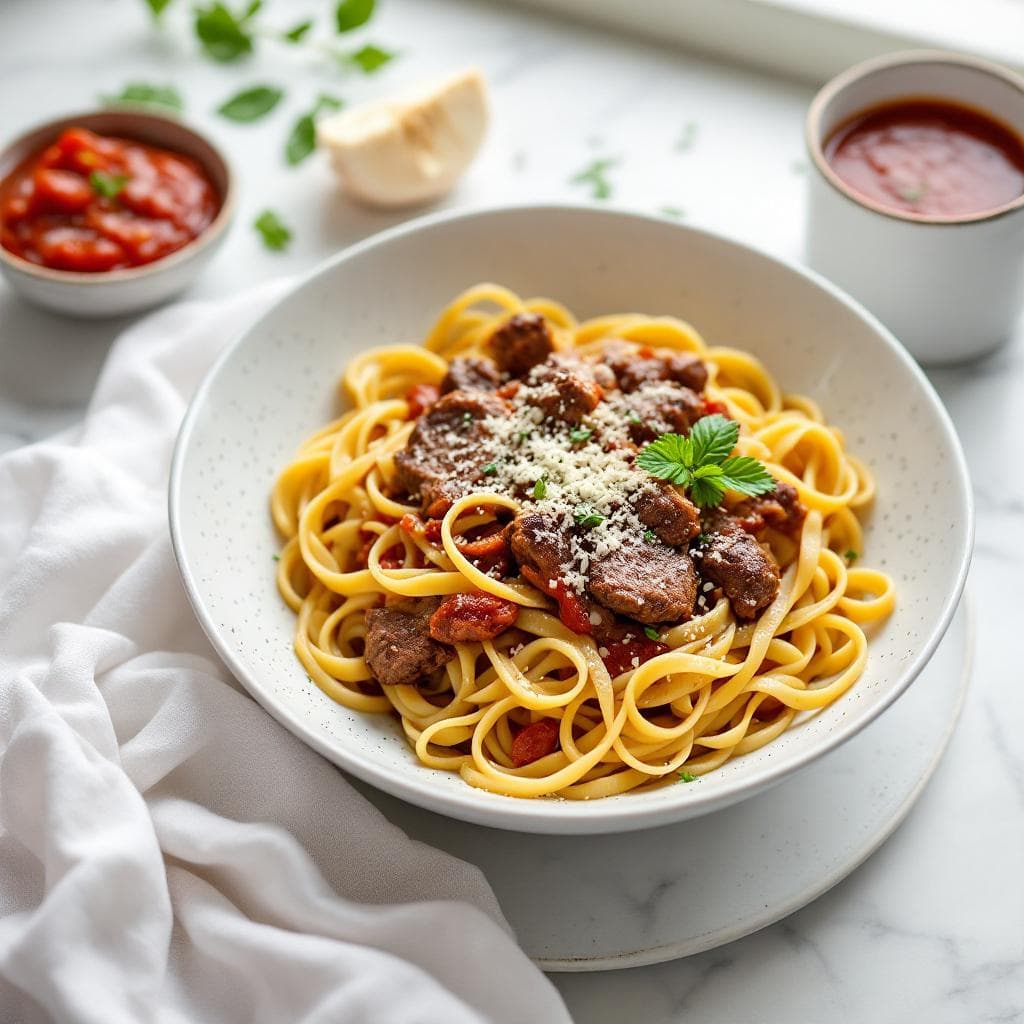
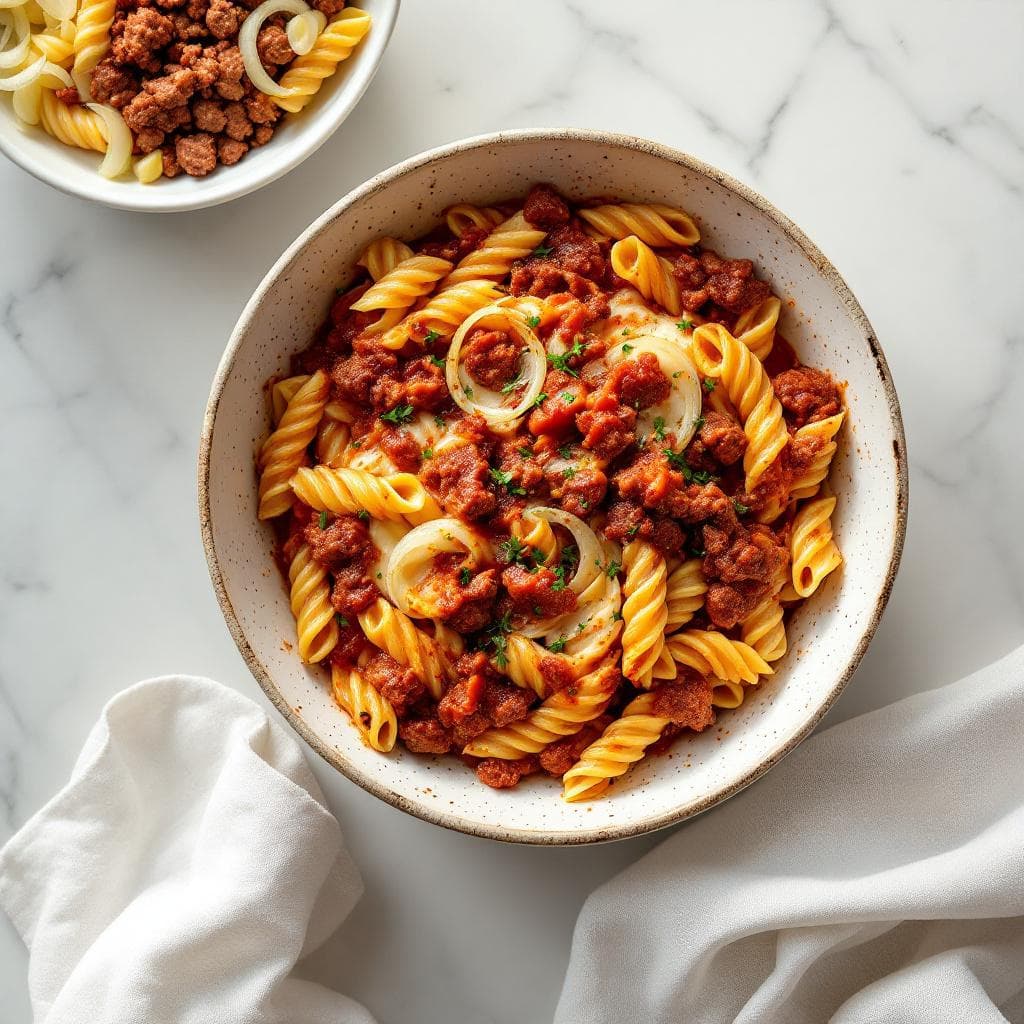
This classic beef Bolognese is a deeply layered, slow-simmered ragù built on a foundation of soffritto, dry white wine, and whole milk, yielding a sauce of extraordinary richness and nuance. Tossed with silky tagliatelle and finished with a generous snowfall of Parmigiano-Reggiano, it is the kind of meal that earns reverent silence at the table. This is not a quick weeknight shortcut — this is the real thing, and it is absolutely worth every unhurried minute.
↓ Jump to Recipe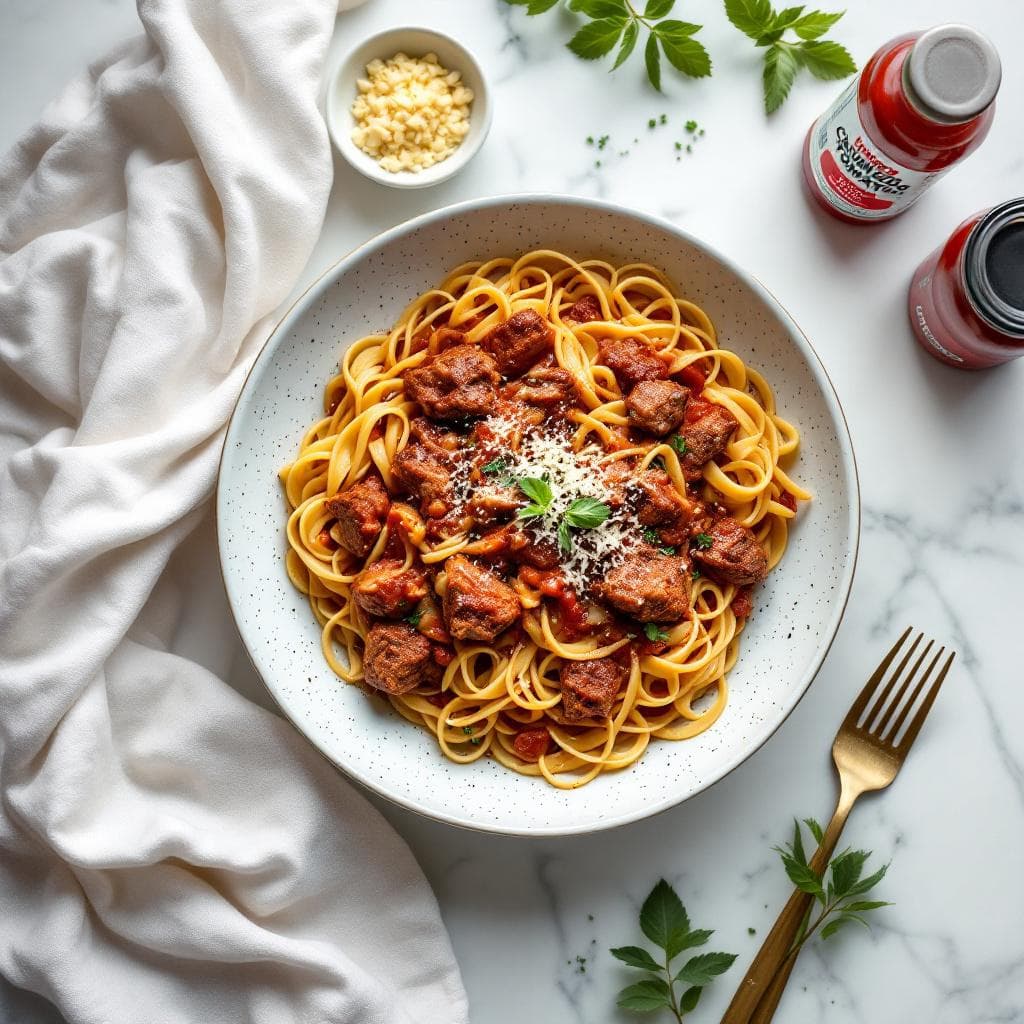
The first time I made a true Bolognese, I was living in a third-floor apartment with a radiator that clanked and a kitchen barely wider than my outstretched arms. It was a Sunday in November, the kind of gray, bone-cold afternoon that makes the idea of spending four hours beside a simmering pot feel less like a chore and more like a necessity. I had just returned from the market with a paper-wrapped package of ground beef, a bottle of serviceable dry white wine, and a bunch of celery I nearly forgot at the checkout. What followed was one of those afternoons I still return to in memory: the slow, amber blooming of the soffritto, the hiss of wine hitting a hot pan, the kitchen filling with something that smelled like patience itself.
What sets this Bolognese apart from the rushed, tomato-forward versions that crowd so many menus is a commitment to technique and proportion. The soffritto, a fine brunoise of yellow onion, carrot, and celery, is coaxed low and slow until it nearly dissolves, forming an aromatic base of remarkable sweetness. Whole milk is introduced early, before the wine, allowing the fat to tenderize the meat and mellow any residual sharpness. The tomato component, a modest addition of tomato paste and crushed San Marzano tomatoes, is intentionally restrained. Bolognese is a meat sauce, not a tomato sauce, and honoring that distinction is what gives this ragù its characteristic depth, density, and quiet complexity.
This is a recipe for the long weekend, for a dinner party where the occasion calls for something genuinely impressive, or for a Sunday when you want the apartment to smell extraordinary by four in the afternoon. It suits the first cold snap of autumn as naturally as it suits a midwinter dinner with close friends and an open bottle of Barbera d'Asti. It is equally ideal for the dedicated home cook seeking a project and for the seasoned pasta enthusiast looking to refine a signature dish. Children love it, parents request it, and guests tend to ask for the recipe before they have finished their first bowl.
What you can expect from this recipe is a sauce that is unhurried and deeply rewarding. The preparation is straightforward, the technique is precise but approachable, and the result is a ragù that clings to each ribbon of tagliatelle with silky authority. Plan for a low, steady simmer of at least two hours, during which the sauce will transform from a loosely combined mixture into something altogether more unified and extraordinary. Pour yourself a glass of whatever you opened for the pot, and let it cook.
Prep
20 min
Cook
2 hours 45 min
Total
3 hours 5 min
Servings
6 servings
Calories
720 / serving
Ingredients
- 1 pound ground beef (80/20 blend)
- 3 tablespoons unsalted butter, divided
- 2 tablespoons extra-virgin olive oil
- 1 medium yellow onion, finely minced (about 1 cup)
- 2 medium carrots, finely minced (about 3/4 cup)
- 3 stalks celery, finely minced (about 3/4 cup)
- 4 cloves garlic, finely minced
- 1 cup whole milk
- 1 cup dry white wine
- 1 (6-ounce) can tomato paste
- 1 (14.5-ounce) can crushed San Marzano tomatoes
- 1 cup beef broth, plus more as needed
- 1 teaspoon kosher salt, plus more to taste
- 1/2 teaspoon freshly ground black pepper
- 1 pound fresh or dried tagliatelle
- 1/2 cup freshly grated Parmigiano-Reggiano, for serving
Instructions
- 1
Prepare the soffritto: In a large, heavy-bottomed Dutch oven or wide braising pan, melt 2 tablespoons of the butter with the olive oil over medium-low heat. Add the minced onion, carrot, and celery with a generous pinch of kosher salt. Cook, stirring occasionally, for 12 to 15 minutes until the vegetables are deeply softened, translucent, and lightly golden at the edges. Add the garlic and cook for an additional 2 minutes until fragrant. The soffritto should be fragrant, sweet, and nearly melting into the fat.
- 2
Brown the meat: Increase the heat to medium-high and add the ground beef directly to the soffritto. Using a wooden spoon or stiff spatula, break the meat into very fine crumbles as it cooks. Season with 1 teaspoon kosher salt and 1/2 teaspoon black pepper. Cook, stirring frequently, for 6 to 8 minutes until the beef is browned and any rendered liquid has evaporated from the pan. The fond developing on the bottom of the pot is flavour, not a problem.
- 3
Add the milk: Reduce the heat to medium and pour in the whole milk. Stir to combine and allow the milk to simmer, stirring occasionally, for 8 to 10 minutes until it has been fully absorbed into the meat mixture. This step tenderizes the beef and rounds the final flavour of the ragù, lending it a subtle creaminess that distinguishes a proper Bolognese.
- 4
Deglaze with wine: Pour in the dry white wine and stir, scraping up any caramelized bits from the bottom of the pot. Allow the wine to simmer briskly for 8 to 10 minutes, stirring occasionally, until it has nearly fully evaporated and the sharp alcohol aroma has cooked off. The mixture should smell deeply savory and concentrated at this stage.
- 5
Build the sauce: Add the tomato paste and stir it thoroughly into the meat, cooking for 2 minutes to allow it to caramelize slightly and lose its raw edge. Add the crushed San Marzano tomatoes and the beef broth, stirring to combine everything into a unified sauce. Bring to a gentle simmer, then reduce the heat to low.
- 6
Simmer low and slow: Partially cover the pot and allow the ragù to simmer over the lowest possible heat for a minimum of 2 hours, and up to 3 hours for an even more developed flavour. Stir every 20 to 30 minutes and add a splash of additional beef broth if the sauce tightens too aggressively. The finished ragù should be rich, thick, and glossy, with the fat gently pooling at the surface. Stir in the remaining 1 tablespoon of butter off the heat for a final layer of gloss and richness. Adjust seasoning with salt and pepper.
- 7
Cook the pasta and serve: Bring a large pot of generously salted water to a rolling boil. Cook the tagliatelle according to package directions until al dente, reserving 1 cup of the starchy pasta water before draining. Add the drained tagliatelle directly to the pot of ragù over low heat, tossing vigorously to coat each ribbon thoroughly. Add splashes of reserved pasta water as needed to achieve a sauce that flows fluidly but clings to the pasta. Divide among warmed bowls and finish each serving with a generous amount of freshly grated Parmigiano-Reggiano.
Tips and Tricks
- ✓Make-ahead and storage: Bolognese is one of those rare sauces that genuinely improves overnight. Prepare the ragù up to three days in advance, store it in an airtight container in the refrigerator, and reheat it gently over low heat with a splash of broth to loosen it before tossing with freshly cooked pasta. The sauce also freezes beautifully for up to three months.
- ✓Meat blend variation: For a more complex and nuanced ragù in the Bolognese tradition, substitute half of the ground beef with ground pork or a combination of ground veal and pork. The additional fat from the pork enriches the sauce considerably, and the veal introduces a delicate sweetness that pairs beautifully with the San Marzano tomatoes.
- ✓Pasta pairing guidance: Tagliatelle is the canonical pairing for Bolognese, and for very good reason. Its broad, ribboned surface area captures and holds the dense ragù in a way that thinner pastas like spaghetti simply cannot. Pappardelle and rigatoni are both excellent alternatives. If using dried pasta, choose a high-quality bronze-die extruded variety for superior sauce adhesion.
Nutrition Per Serving
Estimated values
720
Calories
38g
Protein
28g
Fat
74g
Carbs
5g
Fiber
9g
Sugar
860mg
Sodium
Frequently Asked Questions
What is the difference between Bolognese and meat sauce?
Can I make Bolognese in a slow cooker?
Why does Bolognese use milk?
How long should Bolognese simmer?
What wine should I use in Bolognese?
You Might Also Like
Enjoyed this recipe?
Get our best recipes delivered to your inbox every week.
Comments
No comments yet — be the first!